

PASSEGGIATA TABUCCHI 5
A WALK WITH TABUCCHI 5
Un calendario. Campane del mio Villagio
A Calendar. Bells of my Village
Comune di Vecchiano
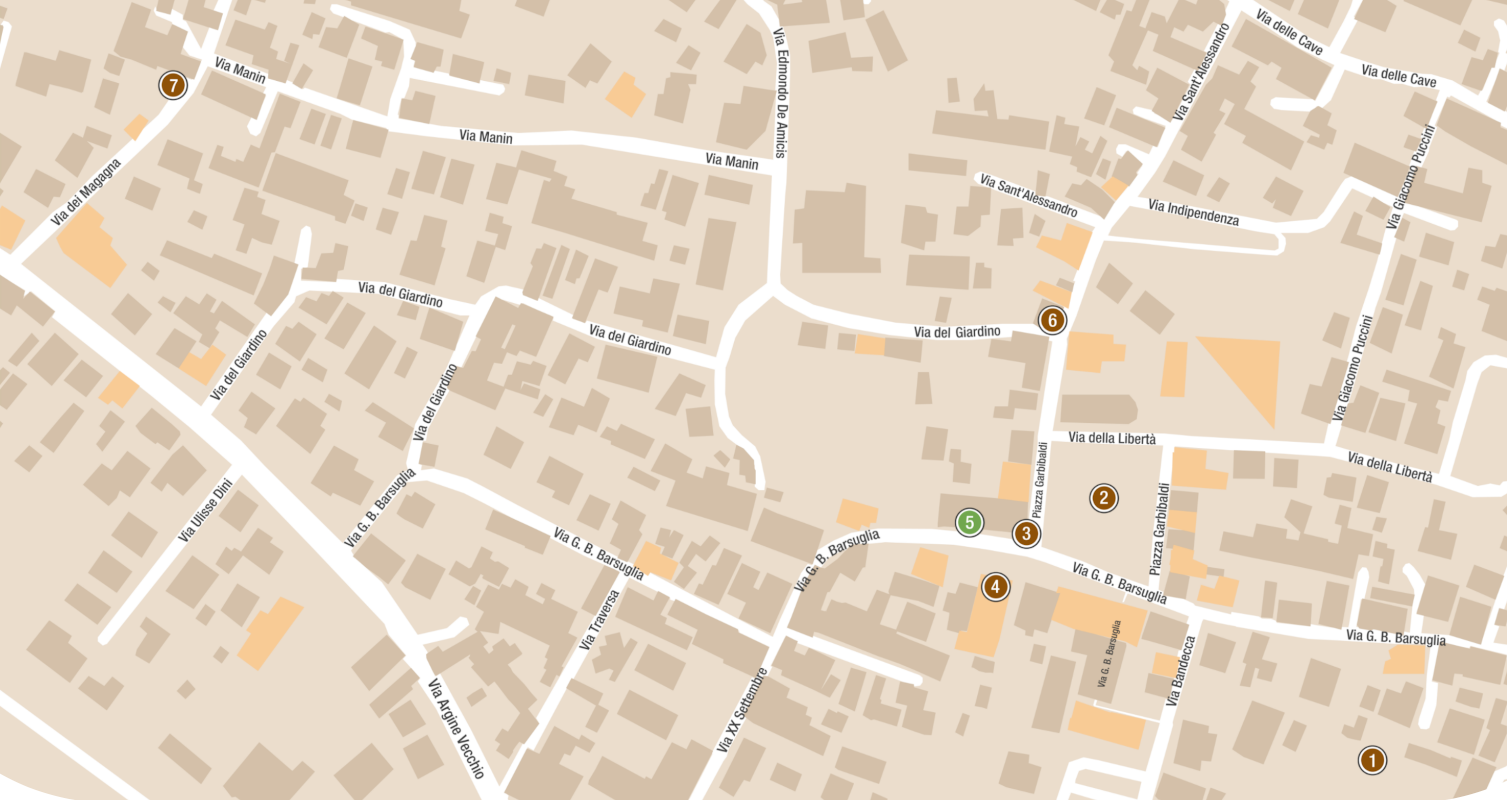
Via G. B. Barsuglia, 182
The original title of Davide Benati and Antonio Tabucchi’s work, exhibited in the Town Hall’s first floor, is A Calendar. Bells of my Village. Proses in Prose. Watercolours in Watercolour. The volume, signed by the authors and edited by the Galleria Galaverni of Reggio Emilia in 1996, has a meaningful dedication: «To Margherita and Zé, for all the seasons». Printed in Bodoni font on Modigliani paper in 350 numbered specimens (the first 50 of which featured an aquatint by Davide Benati), this elegant “Artist’s Book” has a Flaubertian title, borrowed by Pessoa, Bells of my Village. «Clocher de village: fait battre le coeur», says the opening quote. Half of the book consists of twelve short texts written by Tabucchi, one for each month of the year, the other half consists of watercolours painted by Benati made of «pure colours, compacted in rarefied forms, abstractedness of thoughts which are images. Pictorial as well as literary images, of course». The exhibit features also a small painting which reproduces the text of the dedication.
Benati’s works together with Tabucchi’s texts were first exhibited in the spacious rooms of Magazzini dei Cereali della Tenuta Salviati in Migliarino Pisano, from January 21st to January 28th 1996. The Vecchiano exhibit was organized by the Town Hall Administration, curated by Massimo Marianetti and set up following the project led by architect Fabio Daole, with the contribution of all the Town Hall staff supervised by accountant Goffredo Boschetti. It featured the original watercolours used for the printing press and the final print proof of the text for the subsequent binding of the volume. The exhibit was hugely successful from an audience perspective, and the two artists, who received tons of displays of affection, decided “to donate” the paintings of A Calendar to the Vecchiano Town Hall. They announced it by surprise to the mayor, at the end of a beautiful and intense inauguration day, and they offered him a special dedication, wishing that he could convey its message to the whole community.
Massimo Marianetti also authored a brochure of the exhibition in which he wrote: «In these times swamped with diaries and calendars, Tabucchi and Benati propose an anti-diary, a calendar where you don’t write down telephone numbers or future arrangements, but that can help you dwell on life’s seasons. A work of symmetries and flimsy balances in which nothing can be fully completed».
In a text written for the occasion of the Tabucchian walk, Davide Benati recalls his long friendship and «profound intellectual kinship» with Tabucchi, started at the end of 1984:
«I had just returned home from a trip to Nepal and I read Indian Nocturne. I relived some emotional states that I had just experienced during that trip and that made me think: I’d like to meet this writer. So I wrote him a letter that was promptly replied to: Antonio would come to Milan in the first months of 1995 (he had to stop by Feltrinelli with his book Little Misunderstandings of No Importance), and we would meet in my studio. He kept his promise and so, through some night calls and some meetings, we started to build a friendship that grew over the years until the end. During the time of our friendship we also exchanged gifts (he wrote texts for my exhibits, I gave him some watercolours of mine). Bells of my Village became like the sum of these exchanges, since it was also a limited edition book, like a niche art book, whose original copies are in Vecchiano (the right place!). One day Antonio phoned me from Paris to tell me that he would send me via fax (the Internet wasn’t popular back then) twelve short ‘proses in prose’ and he asked me to ‘add colour to those melancholies’. When I received them, after reading them, I told myself that I could never be able to match the extraordinary beauty of those words: they could stir so many emotions, so many images, veiled with a melancholy which made them elusive and deep. And full of echoes. That was it! I focused on the echoes and I started to think that echoes are sounds and that colours have ‘sound resonances’, so images are actually not needed (they would generate illustrations). I know that Antonio wanted a story that could match his texts, and this was my solution to the challenge. Antonio was pleased with the result and I was happy too».
(Traduzione di Timothy Basi, supervisore)