

PASSEGGIATA TABUCCHI 4
A WALK WITH TABUCCHI 4
Cinema Teatro Olimpia
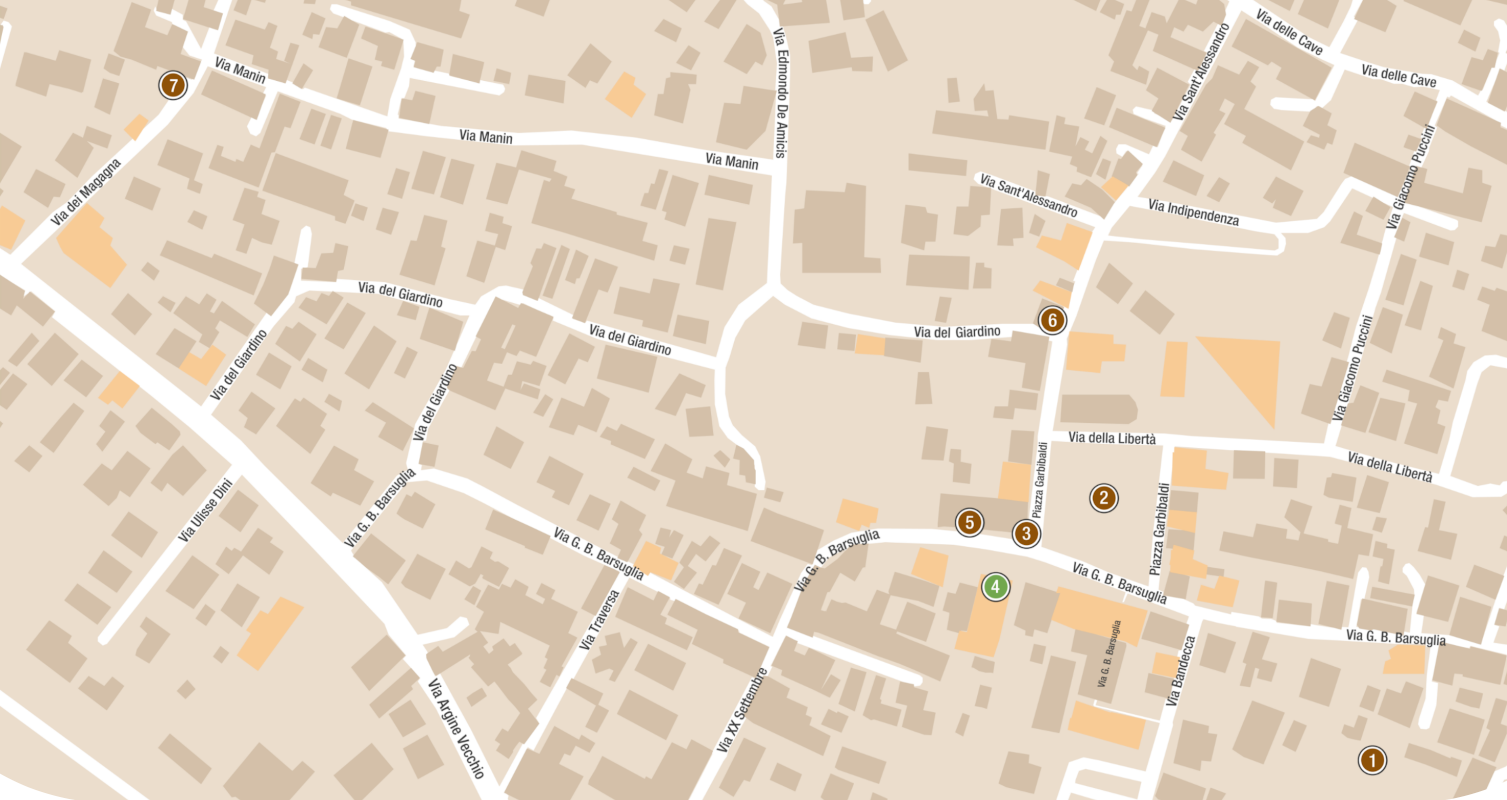
Via G. B. Barsuglia, 20
The Cinema Teatro Olimpia represents for Vecchiano a dive into the past which brings us back to the Fascist regime, to the war and to the post-war period when Italy wanted to overcome the sadness of those years with shows, orchestra performances and films which made people dream. Also for writer Antonio Tabucchi the Cinema Teatro Olimpia represented a magical place replete with unforgettable memories, as readers can see in his first novel, Piazza d’Italia. Overlooking Piazza Garibaldi, yesterday like today, the Cinema Teatro Olimpia becomes, in the literary fiction, “The Splendour”, which wasn’t its original name, but the name of another small cinema teatro operating in the town until the early forties. In Piazza d’Italia the death of Garibaldo, one of the main characters, starts off the story and takes place just in front of “The Splendour”. In the plot also other pages are dedicated to the theatre:
“Borgo was becoming a city. Construction works of the theatre were progressing at a fast speed; the façade was already competed, with a neoclassical cornice and the Victory of Samothrace indicating the name in plaster letters in relief: The Splendour. It was scheduled to open, it was said, by the following Carnival, with Il Paese dei Campanelli and maybe a film: Cabiria. Next to the entrance door, closed by two big intersecting tables, there was already a poster hanging: a woman with a snow white dress, hands woven together and eyes open wide, and a city in flames in the background” (Antonio Tabucchi, Piazza d’Italia).
The Bartalini family bought the land for the construction of the building in 1931 and the space was officially inaugurated in 1934 with the name Cinema Teatro Excelsior. The current name Olimpia was given in 1936 and sound films replaced silent cinema. With the outbreak of the war a period of hardships began and the Cinema Teatro Olimpia, together with The Splendor, was used first as a warehouse of the Italian Air Force and, after the Armistice of September 8th 1943, as a base of the German troops. In September 1944 the Allies freed Vecchiano and the Cinema Teatro Olimpia became the headquarters of Indian, then South-African and finally Brazilian troops. Cinema activities restarted in 1946 with the screening of American films. In the 50s and 60s the cinema became very popular: there were film screenings as well as live concerts, Carnival parties and fairs, all events which were important for the community and that were often sold out thanks to the people who came from as far as Pisa and Livorno.
In the chapter ‘I Veglioni e le miss: la tradizione vecchianese’ of the book curated by Divina Vitale, Cinema Teatro Olimpia dei fratelli Bartalini, published in 2011, we are struck by a photo whose caption says: «1964 - Cinema Teatro Olimpia: Stefania Bartalini and Antonio Tabucchi at the Fair Party».
Things changed in the following years, at first with the appearance of television and then because people started to go to Pisa, Lucca and Viareggio with their own means of transport. In 1994 Nello Bartalini’s cousins Francesco, Nella and Stefania, decided to sell the building to the Vecchiano Municipality, which started a building restoration project that led, in 2011, to giving back to the local community a place that in the past served as the centre of city life.
Since then, the Town Hall is in charge of the theatre agenda - with the collaboration of the Town Hall Council - and since March 2012 it has also become the place where they yearly commemorate Antonio Tabucchi.
(Traduzione di Rina Boschetti)